Bare Metal vs. Hyperscaler: Why Startups Chase Raw GPU Capacity
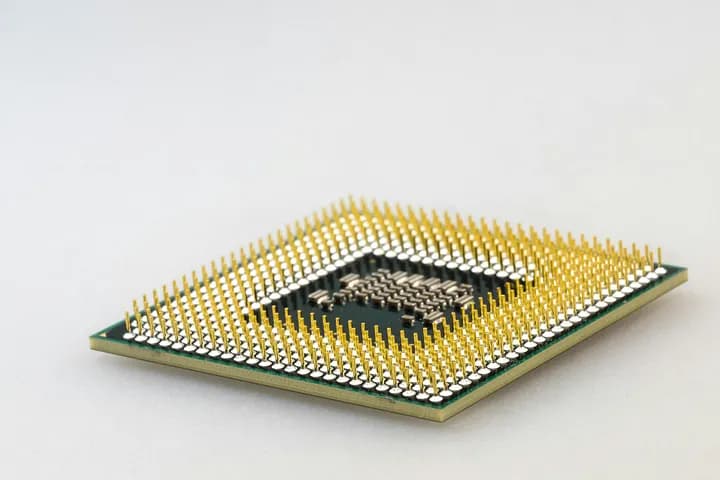
AI today depends on a scarce resource: GPUs. Startups increasingly look past hyperscalers, seeking raw, unabstracted access to high-performance hardware through bare-metal providers.
Intro: The GPU Hunger Games
Artificial intelligence today depends on a scarce resource: GPUs. Training large models or running inference at scale consumes thousands of GPU hours rapidly. This intense demand has made GPU access itself a competitive advantage — companies with capacity move faster, while those waiting fall behind.
The industry's default solution has been hyperscalers: AWS, GCP, and Azure. They provide virtually unlimited cloud resources, enterprise-grade tools, and global infrastructure. However, startups increasingly look elsewhere, seeking _raw, unabstracted access to high-performance hardware_ through bare metal and VPS-based GPU clouds.
For early-stage companies, the priority differs from enterprises. The focus centers on _raw capacity, cost, and speed_ rather than managed services and polished interfaces.
The Hyperscaler Value Prop: What They Offer
AWS, GCP, and Azure built dominance through:
- Managed Services: Kubernetes clusters, ML pipelines, and spot markets handle operational complexity
- Elastic Scaling: Expanding from 10 to 1,000 GPUs overnight is straightforward
- Enterprise Compliance: HIPAA, SOC2, and FedRAMP certifications address regulatory requirements
- Integrated Ecosystem: Storage, networking, analytics, and AI APIs work seamlessly together
For enterprises with complex needs, these advantages justify premium pricing. For startups, however, this toolkit often resembles _using a space shuttle to commute across town._
The Bare Metal / VPS Appeal: Why Startups Like It
Startups prioritize different metrics. With limited runway and pressing investor updates, the central question becomes execution speed. Bare metal and VPS GPU providers directly address this:
- Cost Efficiency: Pricing runs 3–5× lower than hyperscalers for the same silicon
- Control: Root access and full OS control enable custom driver installation and performance tuning
- Performance: Workloads run closer to hardware without virtualization overhead
- Simplicity: Direct access to powerful hardware eliminates navigation through multiple services
_"Startups want speed to experiment, not bureaucracy."_
The Trade-Offs
Bare Metal / VPS Disadvantages:
- Limited elasticity when demand spikes or supply constrains
- Responsibility for job scheduling, monitoring, and observability falls on internal teams
- Variable compliance and reliability standards differ from hyperscaler guarantees
Hyperscaler Disadvantages:
- GPUs cost 3–5× more expensive than bare metal equivalents
- Architectural decisions create lock-in, limiting future flexibility
- Infrastructure complexity diverts engineering focus from model development
_"Bare metal gives you raw speed and savings, hyperscalers give you resilience and reach."_
The Startup Journey: A Real-World Pattern
Most startups follow a predictable infrastructure evolution:
Early Stage → Bare Metal / VPS — At seed or Series A, speed and cost dominate. Founders need affordable GPUs and controllable environments for rapid iteration.
Growth Stage → A Mix of Both — By Series B or C, multiple workloads run across teams. Companies blend bare metal for training with hyperscalers for inference spikes and customer-facing services.
Later Stage → Hybrid or Multi-Cloud — As companies scale and approach enterprise customers, compliance, SLAs, and global availability become priorities.
This progression reflects a maturity curve: early dominance by raw capacity requirements gradually shifts toward resilience and compliance considerations.
Where Infrastructure Matters
Startups pursuing raw GPU capacity often encounter hidden costs:
- Observability gaps revealing idle GPUs and silent bottlenecks
- Workload inefficiency from poor scheduling and resource allocation
- Scaling risks when demand spikes overwhelm fragile infrastructure
Addressing these gaps through proper monitoring, smart scheduling, and infrastructure design helps companies double release velocity and reduce GPU costs by approximately 40%.
Closing: Choosing Smart, Not Just Choosing Sides
Bare metal excels at delivering _speed and savings_, while hyperscalers provide _scale and services_ increasingly critical as companies mature. The optimal infrastructure strategy typically combines both approaches rather than committing exclusively to either.