

AI Systems Strategy
The Missing Layer in AI: Control Planes as Competitive Advantage

Many companies today are winning on the data plane with better models, faster runtimes and optimized inference. We’ve seen rapid progress in systems like vLLM and Text Generation Inference, and increasingly sophisticated multimodal runtimes. The industry has become very good at executing models efficiently. However as these systems move from demos to production, a different problem starts to emerge.
Fast Models, Weak Systems
Many AI systems today are fast in isolation but unpredictable at scale. You see it in production:
latency varies wildly under load
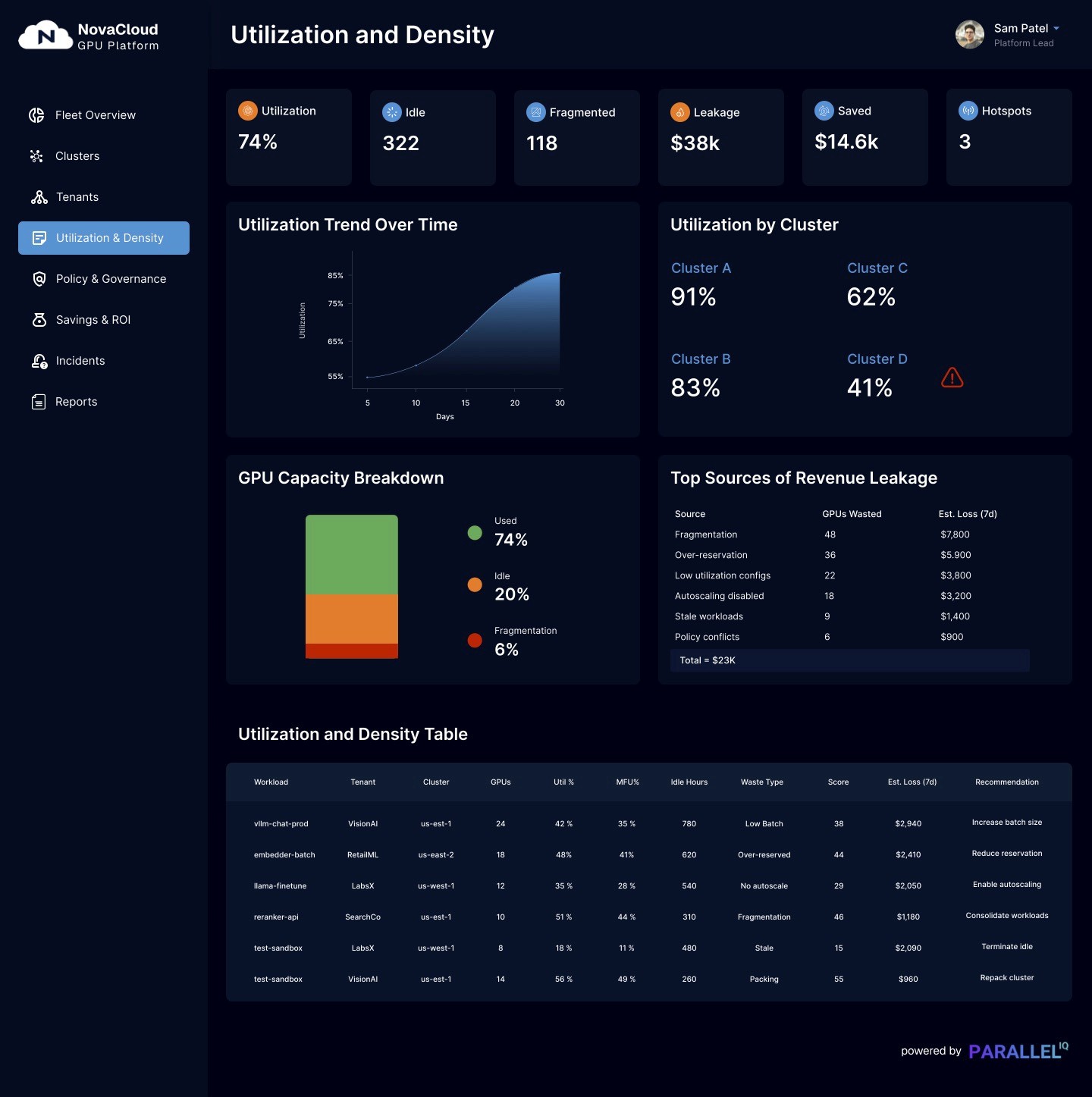
GPU utilization drops due to fragmentation or batching collapse
multi-tenant workloads interfere with each other
costs grow faster than usage
These are issues that cannot be addressed by better models or runtime alone but can be with the control plane.
What the Control Plane Actually Does
The user interaction layer provides simple API calls or UI actions but every request carries implicit intent to make the execution fast, cheap and maintain quality. The control plane is responsible for translating that intent into real decisions:
admission → should this run now?
placement → where should it run?
scheduling → when and with what priority?
resource allocation → which GPU, which cluster?
policy enforcement → quotas, tiers, cost constraints
feedback → how is the system actually behaving?
Without this layer, even the best data plane becomes brittle and reactive rather than intelligent.
The VRIO Shift
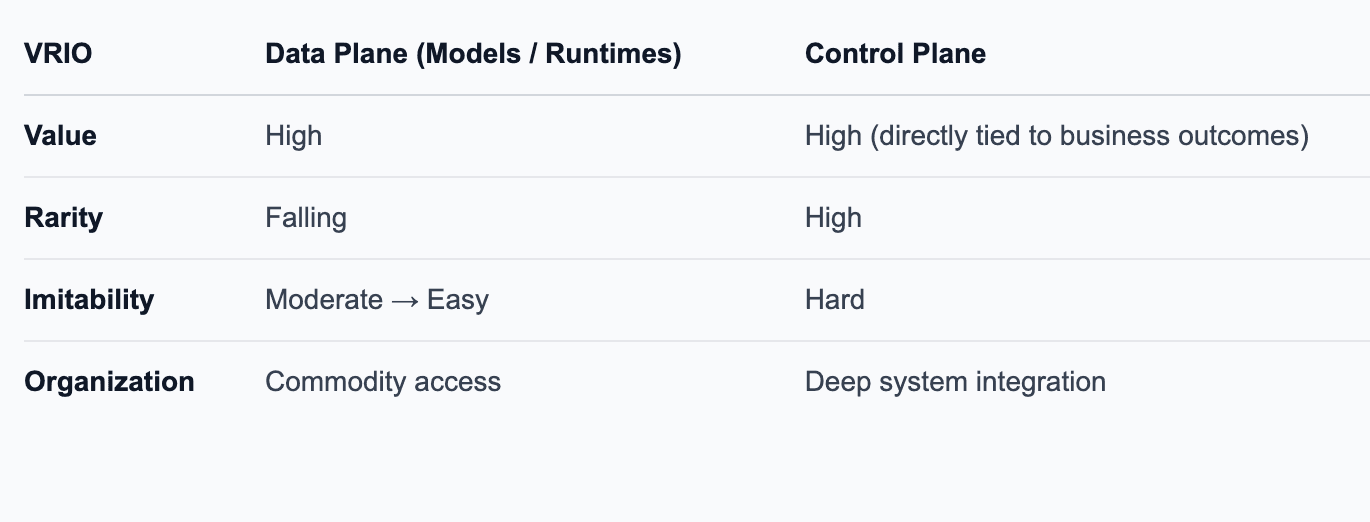
This is where the VRIO framework becomes interesting. Historically, competitive advantage in AI has been driven by models. Below is a comparison of that with the control plane.
Where Advantage is Moving
The industry has over-invested in the data plane. The next frontier is not just how fast you run models but how intelligently your system behaves at scale. That means:
understanding workload intent
making policy-aware placement decisions
adapting to real-time system conditions
closing the loop between execution and control
Final Thought
Performance alone is no longer the deciding factor. As AI systems scale, what matters more is how consistently and efficiently they behave under real-world conditions. Increasingly, that behavior is shaped not just by the runtime, but by the control plane that governs placement, scheduling, and policy decisions above it.