


Cloud Providers and Infrastructure
From Filing Cabinets to AI Pipelines: The Evolution of Data Readiness



Data as the Lifeblood of Business
We’ve always depended on data. In the past, that meant rows of filing cabinets stuffed with customer records and financial ledgers. Then came floppy disks and hard drives, where information was digitized but still siloed. Fast-forward a few decades, and the rise of cloud applications gave every department its own specialized system — ERP for finance, CRM for sales, HR systems for people operations.
Each step in this evolution made businesses faster and more capable. But it also created new challenges: duplication, fragmentation, and complexity. Reports don’t match across departments. Pipelines break silently. Critical decisions get made on stale or incomplete numbers.
Now, artificial intelligence is raising the bar even higher. Unlike past technologies, AI doesn’t just use data — it depends on continuous, clean, and reliable pipelines to function. Without that, models stall, drift, or never make it to production.
This article traces the journey of data systems — from paper to disks to cloud — and shows why today’s biggest barrier to AI adoption isn’t algorithms or GPUs. It’s the lack of AI-ready data pipelines.
Stage 1: The Paper Era — Manual Records and Reporting

Before the digital revolution, data lived in filing cabinets. Customer records, invoices, and employee files were stored as paper documents, often duplicated across departments. Accessing information meant sending someone to dig through folders, making decisions slow and cumbersome.
Reporting was equally manual. Accountants or analysts compiled numbers into monthly or quarterly summaries, often weeks out of date by the time they reached executives. Businesses ran on static reports — snapshots of the past rather than real-time insight.
The result was low agility. Opportunities were missed, problems went undetected, and decision-making relied as much on instinct as on data. In this era, data was a burden to manage rather than an asset to scale.
Stage 2: Digital Storage — From Floppy Disks to Databases
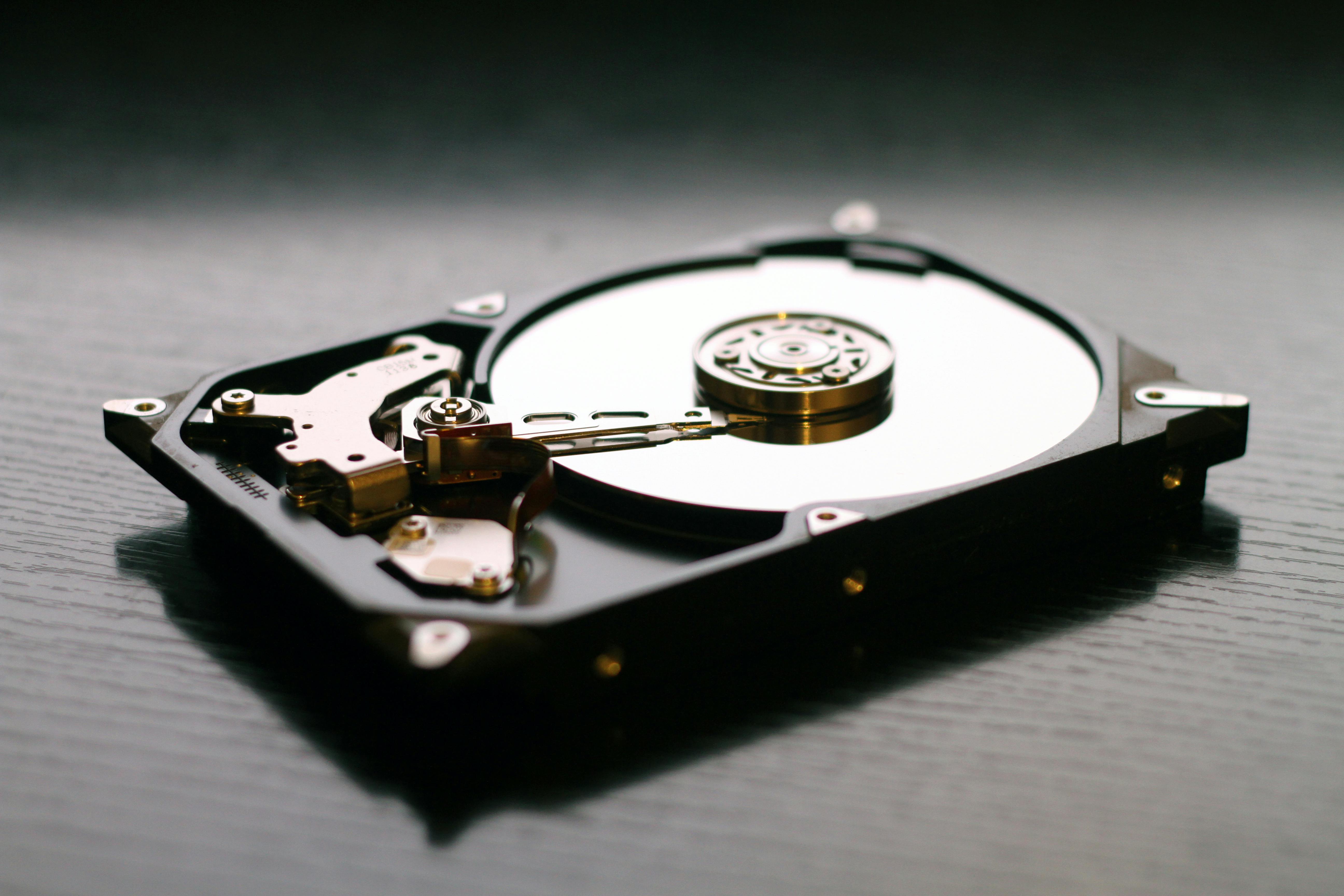
The move from paper to digital storage marked a huge leap forward. Floppy disks and later hard drives allowed companies to digitize records, reducing physical clutter and speeding up access. Relational databases added structure, making it possible to query and analyze data instead of just filing it away.
For the first time, businesses could move beyond static reports and generate insights more quickly. But these gains came with limits. Data was still stored in silos — each department kept its own files, often in different formats and systems. Sharing information across teams remained cumbersome, and workflows were still largely file-based and disconnected.
In short, the digital era brought speed, but not integration. The foundation for modern data systems was laid, but the pieces didn’t yet connect.
Stage 3: Enterprise Applications & Cloud Data Systems

The rise of cloud applications transformed how businesses managed their operations. ERP systems handled finance and supply chains, CRM platforms tracked customer relationships, and HR software managed people operations. Each department gained a powerful, specialized tool — all accessible from the browser instead of the filing cabinet or local server.
But with this shift came a new challenge: fragmentation. Finance, sales, HR, and operations all ran on different systems, each with its own data model and storage. Information flowed more quickly within a department, but rarely across the organization. Customer data in the CRM didn’t automatically align with billing data in the ERP. Marketing metrics lived in yet another silo.
Businesses had more power than ever, but the lack of integration meant leaders often struggled to get a single, trusted view of the truth. The very tools that promised speed and agility ended up multiplying complexity.
Stage 4: The Data Integration Era — APIs, MuleSoft, Informatica
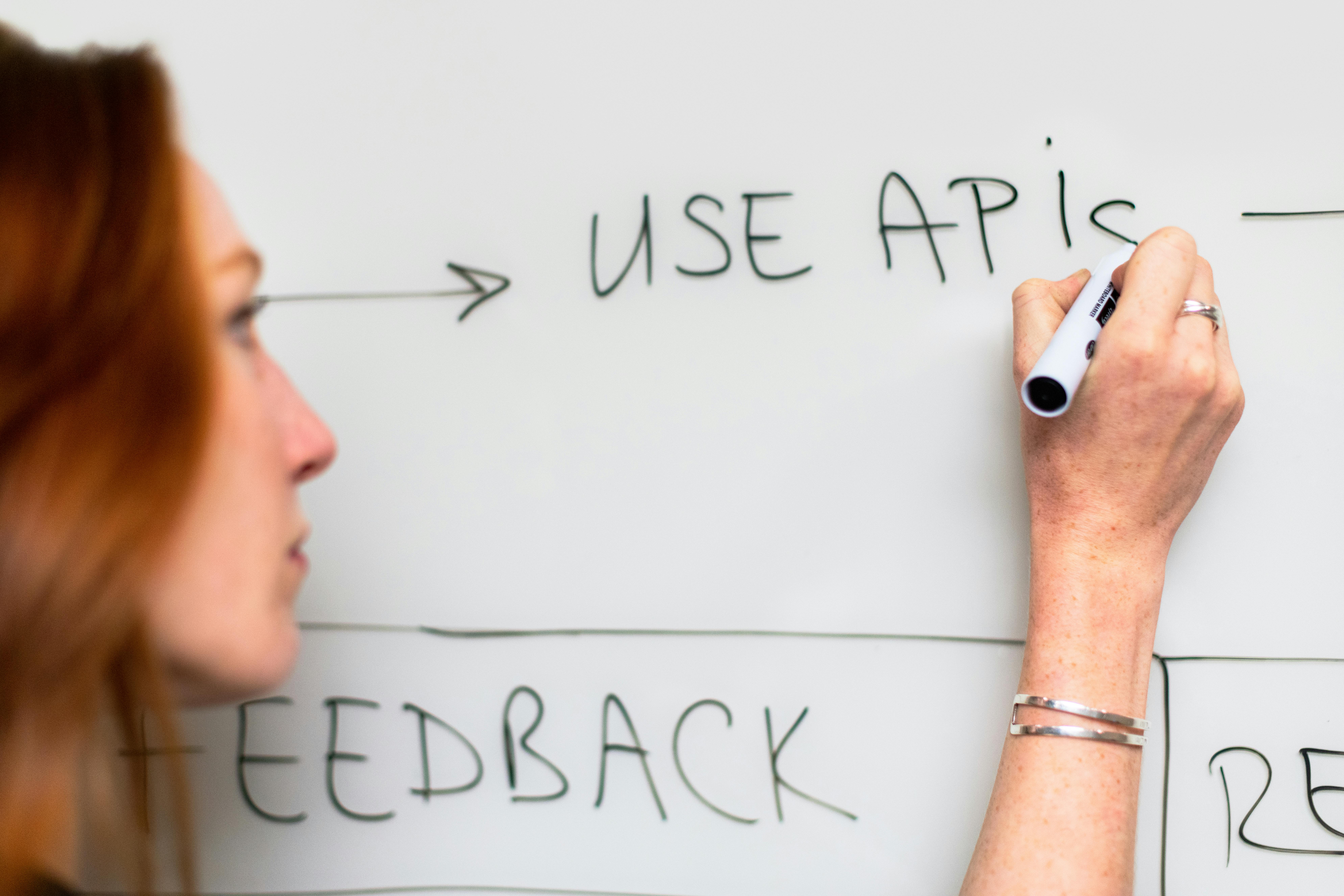
As cloud applications multiplied, the demand for integration grew. Companies turned to middleware and ETL/ELT tools — platforms like Informatica, MuleSoft, and later Fivetran or Stitch — to connect disparate systems. Data could now flow from CRM into ERP, or from HR systems into a data warehouse, powering dashboards and business intelligence.
This era enabled executives to finally see cross-functional insights: revenue vs. churn, sales pipeline vs. customer support, finance vs. operations. But the integrations were often fragile. Pipelines broke silently, formats drifted, and teams wasted hours troubleshooting failures. Each connection was a custom project, requiring constant maintenance as systems evolved.
The integration era solved the silo problem at the surface level, but it introduced a new burden: keeping pipelines reliable at scale. For many mid-market companies, this is where the cracks in their data foundations still show today.
Stage 5: Today’s Challenge — Making Business Data AI Ready

Artificial intelligence raises the bar higher than any previous shift. Unlike BI dashboards or one-off reports, AI models don’t just consume data — they require continuous, reliable, and high-quality pipelines. Every stall, duplication, or drift in data directly impacts training, inference, and ultimately business outcomes.
For mid-market companies, this is the critical bottleneck. Data often remains fragmented across ERP, CRM, HR, and SaaS apps. Pipelines exist, but they are brittle and poorly monitored. Engineers spend more time debugging and firefighting than enabling innovation. The result? Models that stall in development, drift in production, or never make it past pilot projects.
AI-ready pipelines aren’t just about connecting systems. They demand:
Observability to catch failures and drift before they break outcomes.
Resilience so pipelines can recover automatically when things go wrong.
Governance to ensure data is trusted, consistent, and usable across the enterprise.
Without this foundation, AI initiatives will remain stuck in prototypes instead of driving business value.
The Future of AI-Native Data Infrastructure
The next frontier isn’t just about integrating systems — it’s about building data infrastructure designed from the ground up with AI in mind. Traditional pipelines were built to feed dashboards. AI-ready pipelines must be faster, smarter, and self-correcting.
Several trends point the way forward:
Data observability becomes non-negotiable. Tools like Monte Carlo, Soda, and Sifflet monitor data freshness, volume, distribution, and schema. They alert teams when something breaks, preventing silent failures that could poison model training or skew inference.
Modern orchestration replaces brittle ETL. Platforms like Airflow, Prefect, and dbt automate complex workflows, manage dependencies, and keep data transformations reliable. They bring versioning, testing, and reusability to the data engineering world — the same rigor that DevOps brought to software.
Pipelines evolve into AI-native backbones. Instead of one-off integrations, companies need end-to-end systems with:
Monitoring of both infrastructure and model outputs.
Governance to ensure data is compliant, secure, and trusted.
Cost awareness to track GPU/compute utilization and prevent runaway spend.
The vision is clear: an AI-native data stack that is observable, resilient, and aligned with business outcomes. This is the foundation that will separate companies who experiment with AI from those who successfully operationalize it at scale.
Case in Point: Data Readiness Unlocks AI Value
A mid-sized healthcare provider with fragmented EHR and billing systems couldn’t get AI pilots off the ground. After a data audit and pipeline modernization, they cut duplicate records by 80%, reduced data latency from 7 days to 24 hours, and deployed a predictive model that lowered missed appointments by 15%. The lesson: AI success depends less on algorithms and more on AI-ready data pipelines.
Closing: Building for the Next Era of Data Pipelines
From filing cabinets to floppy disks, from cloud apps to brittle integrations, every stage of data evolution has expanded what businesses can do. Each leap solved old problems but created new ones. Today, AI is the next leap — and it demands something different: data pipelines built for reliability, scale, and trust.
For mid-market companies, the challenge is no longer whether to adopt AI, but how to prepare their data so AI can actually deliver. Without AI-ready pipelines, initiatives risk stalling before they ever reach production. With them, businesses unlock faster learning, better decisions, and a real competitive edge.
At ParallelIQ, we believe this is the defining challenge of the decade: closing the AI Execution Gap by helping organizations move from fragmented data systems to AI-native infrastructure. In future articles, we’ll dive deeper into practical steps for building observability, governance, and resilience into data pipelines — the foundations every AI initiative needs to succeed.
👉 Don’t let your data hold back your AI. The companies that win in the next decade will be those that treat their pipelines not as an afterthought, but as the true engine of intelligence. [Schedule a call to discuss → here]

Data as the Lifeblood of Business
We’ve always depended on data. In the past, that meant rows of filing cabinets stuffed with customer records and financial ledgers. Then came floppy disks and hard drives, where information was digitized but still siloed. Fast-forward a few decades, and the rise of cloud applications gave every department its own specialized system — ERP for finance, CRM for sales, HR systems for people operations.
Each step in this evolution made businesses faster and more capable. But it also created new challenges: duplication, fragmentation, and complexity. Reports don’t match across departments. Pipelines break silently. Critical decisions get made on stale or incomplete numbers.
Now, artificial intelligence is raising the bar even higher. Unlike past technologies, AI doesn’t just use data — it depends on continuous, clean, and reliable pipelines to function. Without that, models stall, drift, or never make it to production.
This article traces the journey of data systems — from paper to disks to cloud — and shows why today’s biggest barrier to AI adoption isn’t algorithms or GPUs. It’s the lack of AI-ready data pipelines.
Stage 1: The Paper Era — Manual Records and Reporting

Before the digital revolution, data lived in filing cabinets. Customer records, invoices, and employee files were stored as paper documents, often duplicated across departments. Accessing information meant sending someone to dig through folders, making decisions slow and cumbersome.
Reporting was equally manual. Accountants or analysts compiled numbers into monthly or quarterly summaries, often weeks out of date by the time they reached executives. Businesses ran on static reports — snapshots of the past rather than real-time insight.
The result was low agility. Opportunities were missed, problems went undetected, and decision-making relied as much on instinct as on data. In this era, data was a burden to manage rather than an asset to scale.
Stage 2: Digital Storage — From Floppy Disks to Databases

The move from paper to digital storage marked a huge leap forward. Floppy disks and later hard drives allowed companies to digitize records, reducing physical clutter and speeding up access. Relational databases added structure, making it possible to query and analyze data instead of just filing it away.
For the first time, businesses could move beyond static reports and generate insights more quickly. But these gains came with limits. Data was still stored in silos — each department kept its own files, often in different formats and systems. Sharing information across teams remained cumbersome, and workflows were still largely file-based and disconnected.
In short, the digital era brought speed, but not integration. The foundation for modern data systems was laid, but the pieces didn’t yet connect.
Stage 3: Enterprise Applications & Cloud Data Systems

The rise of cloud applications transformed how businesses managed their operations. ERP systems handled finance and supply chains, CRM platforms tracked customer relationships, and HR software managed people operations. Each department gained a powerful, specialized tool — all accessible from the browser instead of the filing cabinet or local server.
But with this shift came a new challenge: fragmentation. Finance, sales, HR, and operations all ran on different systems, each with its own data model and storage. Information flowed more quickly within a department, but rarely across the organization. Customer data in the CRM didn’t automatically align with billing data in the ERP. Marketing metrics lived in yet another silo.
Businesses had more power than ever, but the lack of integration meant leaders often struggled to get a single, trusted view of the truth. The very tools that promised speed and agility ended up multiplying complexity.
Stage 4: The Data Integration Era — APIs, MuleSoft, Informatica

As cloud applications multiplied, the demand for integration grew. Companies turned to middleware and ETL/ELT tools — platforms like Informatica, MuleSoft, and later Fivetran or Stitch — to connect disparate systems. Data could now flow from CRM into ERP, or from HR systems into a data warehouse, powering dashboards and business intelligence.
This era enabled executives to finally see cross-functional insights: revenue vs. churn, sales pipeline vs. customer support, finance vs. operations. But the integrations were often fragile. Pipelines broke silently, formats drifted, and teams wasted hours troubleshooting failures. Each connection was a custom project, requiring constant maintenance as systems evolved.
The integration era solved the silo problem at the surface level, but it introduced a new burden: keeping pipelines reliable at scale. For many mid-market companies, this is where the cracks in their data foundations still show today.
Stage 5: Today’s Challenge — Making Business Data AI Ready

Artificial intelligence raises the bar higher than any previous shift. Unlike BI dashboards or one-off reports, AI models don’t just consume data — they require continuous, reliable, and high-quality pipelines. Every stall, duplication, or drift in data directly impacts training, inference, and ultimately business outcomes.
For mid-market companies, this is the critical bottleneck. Data often remains fragmented across ERP, CRM, HR, and SaaS apps. Pipelines exist, but they are brittle and poorly monitored. Engineers spend more time debugging and firefighting than enabling innovation. The result? Models that stall in development, drift in production, or never make it past pilot projects.
AI-ready pipelines aren’t just about connecting systems. They demand:
Observability to catch failures and drift before they break outcomes.
Resilience so pipelines can recover automatically when things go wrong.
Governance to ensure data is trusted, consistent, and usable across the enterprise.
Without this foundation, AI initiatives will remain stuck in prototypes instead of driving business value.
The Future of AI-Native Data Infrastructure
The next frontier isn’t just about integrating systems — it’s about building data infrastructure designed from the ground up with AI in mind. Traditional pipelines were built to feed dashboards. AI-ready pipelines must be faster, smarter, and self-correcting.
Several trends point the way forward:
Data observability becomes non-negotiable. Tools like Monte Carlo, Soda, and Sifflet monitor data freshness, volume, distribution, and schema. They alert teams when something breaks, preventing silent failures that could poison model training or skew inference.
Modern orchestration replaces brittle ETL. Platforms like Airflow, Prefect, and dbt automate complex workflows, manage dependencies, and keep data transformations reliable. They bring versioning, testing, and reusability to the data engineering world — the same rigor that DevOps brought to software.
Pipelines evolve into AI-native backbones. Instead of one-off integrations, companies need end-to-end systems with:
Monitoring of both infrastructure and model outputs.
Governance to ensure data is compliant, secure, and trusted.
Cost awareness to track GPU/compute utilization and prevent runaway spend.
The vision is clear: an AI-native data stack that is observable, resilient, and aligned with business outcomes. This is the foundation that will separate companies who experiment with AI from those who successfully operationalize it at scale.
Case in Point: Data Readiness Unlocks AI Value
A mid-sized healthcare provider with fragmented EHR and billing systems couldn’t get AI pilots off the ground. After a data audit and pipeline modernization, they cut duplicate records by 80%, reduced data latency from 7 days to 24 hours, and deployed a predictive model that lowered missed appointments by 15%. The lesson: AI success depends less on algorithms and more on AI-ready data pipelines.
Closing: Building for the Next Era of Data Pipelines
From filing cabinets to floppy disks, from cloud apps to brittle integrations, every stage of data evolution has expanded what businesses can do. Each leap solved old problems but created new ones. Today, AI is the next leap — and it demands something different: data pipelines built for reliability, scale, and trust.
For mid-market companies, the challenge is no longer whether to adopt AI, but how to prepare their data so AI can actually deliver. Without AI-ready pipelines, initiatives risk stalling before they ever reach production. With them, businesses unlock faster learning, better decisions, and a real competitive edge.
At ParallelIQ, we believe this is the defining challenge of the decade: closing the AI Execution Gap by helping organizations move from fragmented data systems to AI-native infrastructure. In future articles, we’ll dive deeper into practical steps for building observability, governance, and resilience into data pipelines — the foundations every AI initiative needs to succeed.
👉 Don’t let your data hold back your AI. The companies that win in the next decade will be those that treat their pipelines not as an afterthought, but as the true engine of intelligence. [Schedule a call to discuss → here]

More articles

AI/ML Model Operations
The Financial Fault Line Beneath GPU Clouds

AI/ML Model Operations
The Financial Fault Line Beneath GPU Clouds

AI/ML Model Operations
The Financial Fault Line Beneath GPU Clouds

AI/ML Model Operations
Variability Is the Real Bottleneck in AI Infrastructure

AI/ML Model Operations
Variability Is the Real Bottleneck in AI Infrastructure

AI/ML Model Operations
Variability Is the Real Bottleneck in AI Infrastructure

AI/ML Model Operations
Orchestration, Serving, and Execution: The Three Layers of Model Deployment

AI/ML Model Operations
Orchestration, Serving, and Execution: The Three Layers of Model Deployment

AI/ML Model Operations
Orchestration, Serving, and Execution: The Three Layers of Model Deployment
Don’t let performance bottlenecks slow you down. Optimize your stack and accelerate your AI outcomes.
Services
© 2025 ParallelIQ. All rights reserved.
Services
© 2025 ParallelIQ. All rights reserved.
Services
© 2025 ParallelIQ. All rights reserved.